






The Center for Wildlife opened 40 years ago in York, and operated out of a trailer with no running water.
Today, its new facility in Cape Neddick treats 2500 sick and injured creatures a year, with plans to handle a thousand more after an 11-year, $11 million expansion is completed.
CFW Executive Director Kristen Lamb said each of the animals they treat is a barometer for their species and ecosystems, and their injuries reflect the impacts of our choices in consumption and commercial and residential housing development.
We visit one of the Center's Ambassadors, animals or birds who cannot be safely released back into the wild due to permanent injuries.
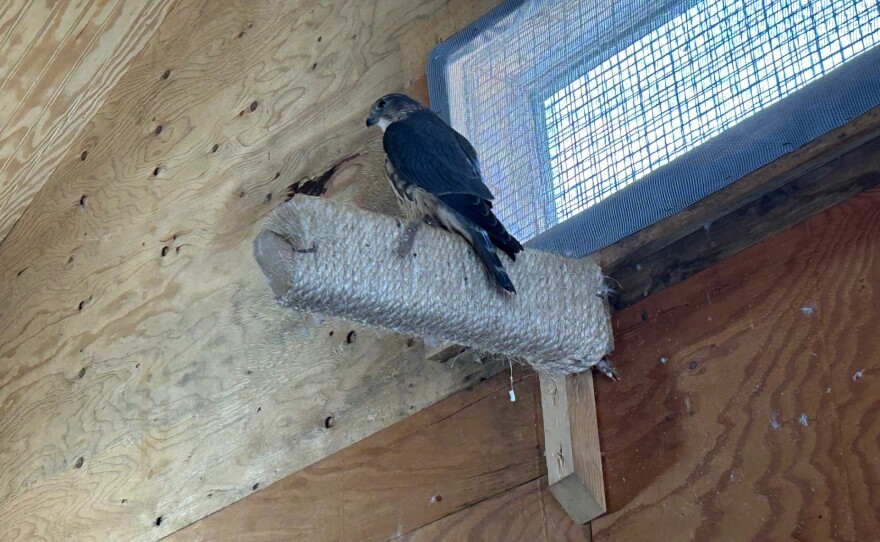
Education Outreach Director Dan Gardoqui unlocked a 10 foot by 12 foot wooden enclosure with a tall ceiling and announced his entrance to a Merlin Falcon settled on her perch.
"All right, Maeve, coming in," Gardoqui said. "Hello."
Maeve screeched in reply. She's almost 9-years-old and unable to fend for herself because she was struck by a car as a hatchling and broke her wing.
"Merlins are unbelievably agile. They're like little figher jets, able to pick off shore birds and swallows and things like that," Gardoqui said. "She can't do that, so we give her a place to stay and take care of her here."
Maeve is one of 24 Ambassadors who are used as part of the Center's educational mission.
Next door, we meet Ollie and Nyx, their large amber eyes taking us in. Nyx was unsure about us but Gardoqui said Ollie, who is trilling softly, decided we were okay.
"Both of these birds have to be extremely agile hunting in the forest in the middle of the night. It's not easy being a tiny northern saw-whet owl," he said.
Ollie and Nyx, Gardoqui said, were injured by car strikes that left them unable to fly. And while these animals are destined for a life here at the Center, its mission is also to treat and release.
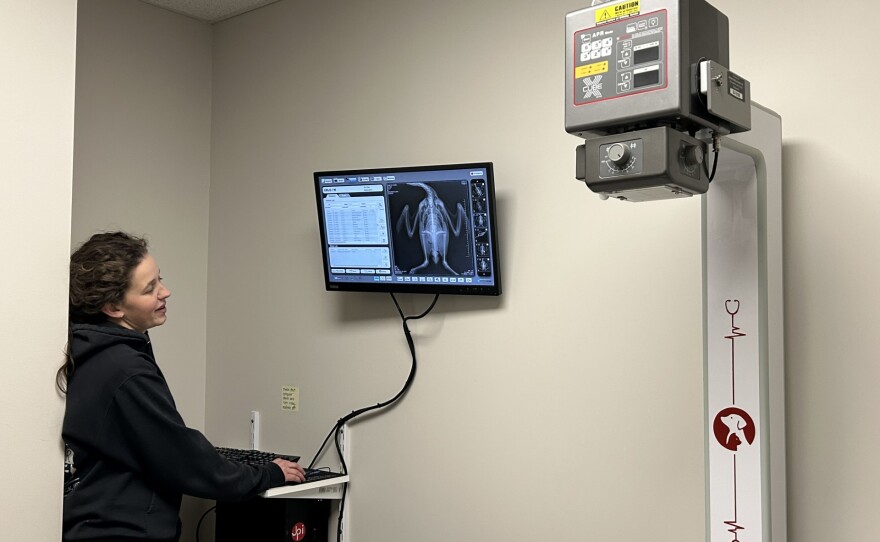
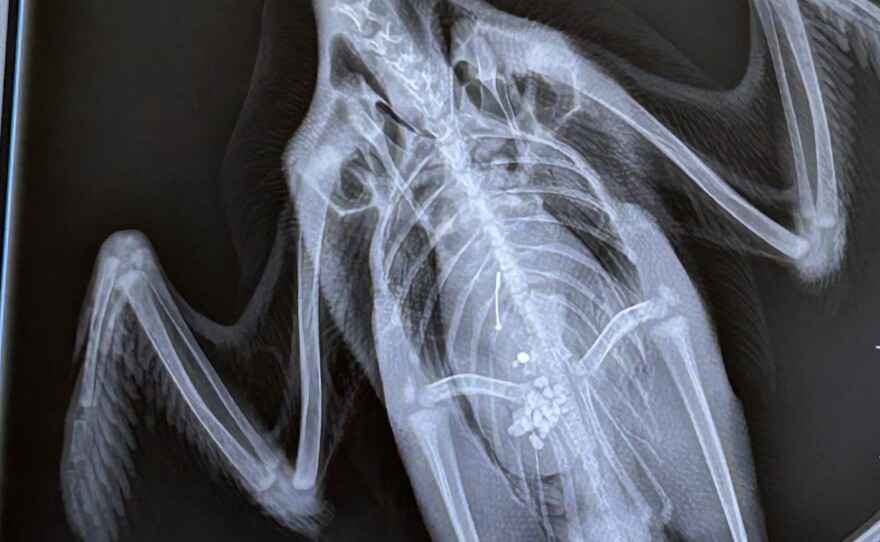
Clinic Coordinator Abby Schofield pointed to the Xray of a young loon that had consumed toxic lead shot left behind by duck hunters.
"We take this picture, see what's going on, put them under anesthesia do the gastric lavage, remove the metal densities from them and treat them for lead toxicity," Schofield said.
Loons take rocks into their gizzard to grind up food, and can consume the lead shot in the process. This young bird was seen falling down on the shore, as the lead affected his central nervous system.
"This baby fully recovered and got released, which is really cool," Schofield said.
The ending isn't always happy. A small number of animals are too badly injured or are in pain, and must be euthanized.
The Center reports that nearly all of the wildlife brought in are injured due to some interaction with humans.
Schofield said while illnesses like avian influenza and West Nile virus come in cycles, injuries increase every year.
"Most of them are human caused, in one way or another. Hit by car. Hit a window. Pet interactions. Those have always been our highest reasons for admission," she said.
Lamb said habitat destruction can force animals to live too closely together, resulting in disease. More residential and commerical development, along with road construction leads to animals being struck by cars.
She suggested that residents join planning boards and master plan housing subcommittees in their communities to understand the process of development and consider change.
"The way we do development requires some new thinking. Creating Village Districts and clusters of houses, but leaving natural resources open. As a species we're very smart and I think we can do a better job of having less of an impact on the species that we love," Lamb said.
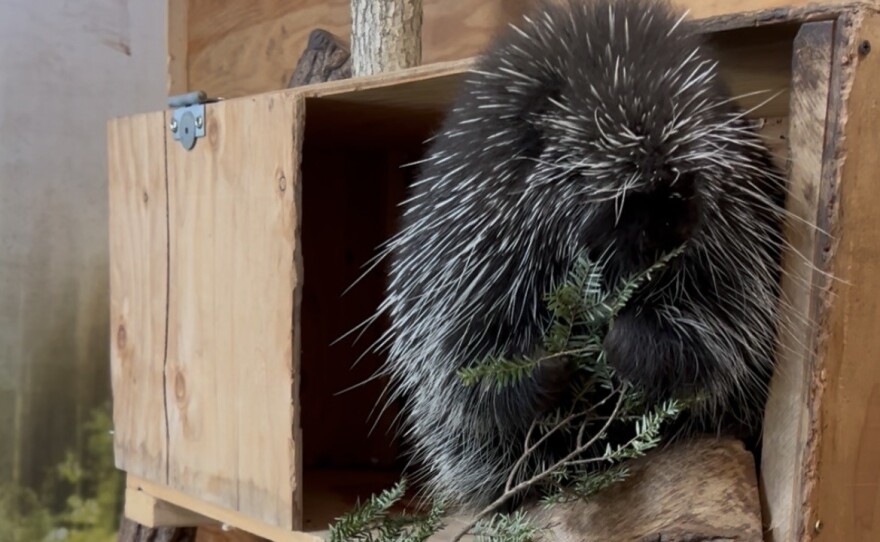
Lamb said this message might best be spread by Ambassadors like Poppy, a Northern American Porcupine who grunts softly to us. She came to the Center as a juvenile after her mother was struck by a car. She's now about 3 or 4 years old, weighs about 12 pounds and has 20 thousand quills.
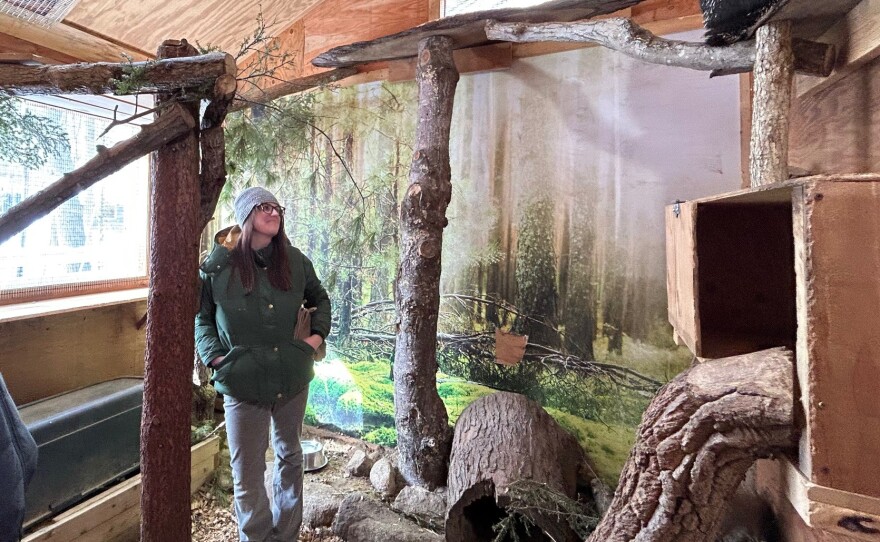
Her enclosure, which has a trademark musky smell, is filled with tree limbs for her to climb on. She nimbly climbs up a tree.
"This whole enclosure is designed to give her the kind of regular activities of daily living she'd have in the wild," Gardoqui said. "Local trees she can climb, which is good for muscles, to keep her nice and stretched and fit."
Lamb said climate change is also affecting birth cycles. Some baby animals are being born late in the season and food normally available to them is out of season. Bats, salamanders and frogs are waking up early from hibernation. Lamb said that they have been ending up at the clinic.
The Center for Wildlife is a private nonprofit that operates without state or federal funding. But Lamb said what it does have is a dedicated community of volunteers, private donors, and businesses that believe in cultivating and strengthening relationships between people and wildlife.
Learn more about the Center for Wildlife here.


