Something happens around this time of year, doesn’t it? The temperatures drop, the leaves start showing off, and, if you’re anything like me, you start daydreaming about next year’s edible yard projects. A bigger garden. And hey– what about a few chickens?
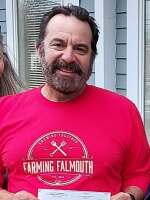
Liz Martin and her husband Keith run a one-acre homestead in East Falmouth.
“Once you get past the holidays, that’s when people decide that they’re going to start ordering their chickens, or they’re going to start drawing out their chicken coop plans,” Liz says. “It’s a good time to dream about being outside again.”
When I went to see them, I almost didn’t realize I had arrived. From the street it looks like just another house in a town neighborhood, not far from the main road. The backyard is a small pasture, where contented-looking animals roam around.
They have alpacas and send away the fleece to be processed, which they turn into products to sell. From the chickens, they get eggs. The chickens all have names and aren’t used for meat. The ducks also give them eggs and the goats give them milk, which they use to make soap. They tap maple trees and get maple syrup in the winter.
None of it happened overnight. Keith and Liz started tiptoeing toward homesteading more than 20 years ago.
“We bought our first house in ‘98 and I had a garden and I made a lot of mistakes and I learned a lot of things,” Liz says. “And then it was in 2012 that we realized that our neighbors had chickens and we were like, ‘Hey, why don't we have chickens? Let's get a couple chickens.’ So we got four chickens and we built them a little coop. A switch flipped then, and we were like, ‘This is really neat.’”
It turned out taking care of a few chickens was easier than she expected. And the flavor of hyperlocal food seemed like a revelation.
“When you get that first egg that you grew in your yard and it tastes so much better than the eggs that you've been eating your whole life and you go, ‘Wow, what else can I do? What else have I been missing out on?’”

The Martins decided to take a big plunge into homesteading in 2020, when they bought their East Falmouth house. The property’s barn was a legacy of an earlier farming era, making it possible to expand the number of chickens.
While pandemic egg shortages were occurring, they put a cooler outside and offered eggs to neighbors for free.
Liz and Keith say people shouldn’t expect to make, or save, a lot of money in the homesteading lifestyle. It’s about feeding their family well, sometimes with meals they’ll talk about for the next few days.
“Last night for dinner, we had this awesome butternut squash that we had harvested and we put maple syrup on it from our trees,” Liz says. “And the night before that we had a duck egg quiche that again had maple syrup in it from our maple trees and we put some apples in it because it was seasonal. It was so tasty.”
Keith continues to work as a driver, while homesteading is Liz’s full-time pursuit. She makes about five thousand goat milk soap bars a year and teaches classes about how to make them. She also runs an online social media portal about homesteading on Cape Cod.
They both really want to inspire other families to try a homesteading journey, like the one they’ve been on.
Keith looks back a few decades and thinks about the guy he was back then. “I could never imagine where I am now when I was, you know, even 30,” he says.
“I still get a lot of impostor syndrome calling myself a farm because I'm not a farmer.” Liz says. “You know, my parents weren't farmers. My grandparents weren't farmers. I don't live on 100 acres in the middle of nowhere. Like, that's what you think a farm is.”
To anyone intrigued by the homesteading lifestyle, the Martins have a few key pieces of advice: research like crazy, allow yourself some initial failures, and go slowly.