

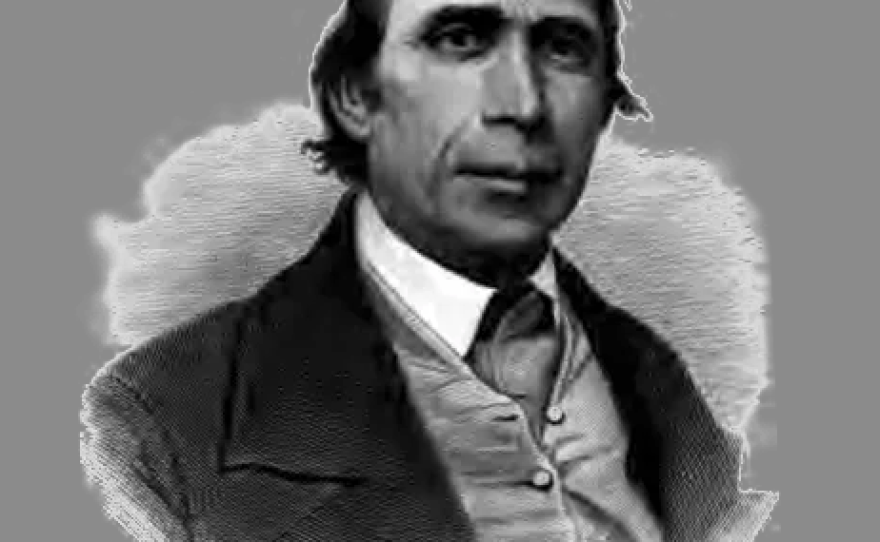
Jonathan W. Walker was one of many Cape Cod men whose early life was all about the sea, born in 1799, Harwich-born captain of a fishing vessel. But then his life took a unique turn that led to national infamy and fame:
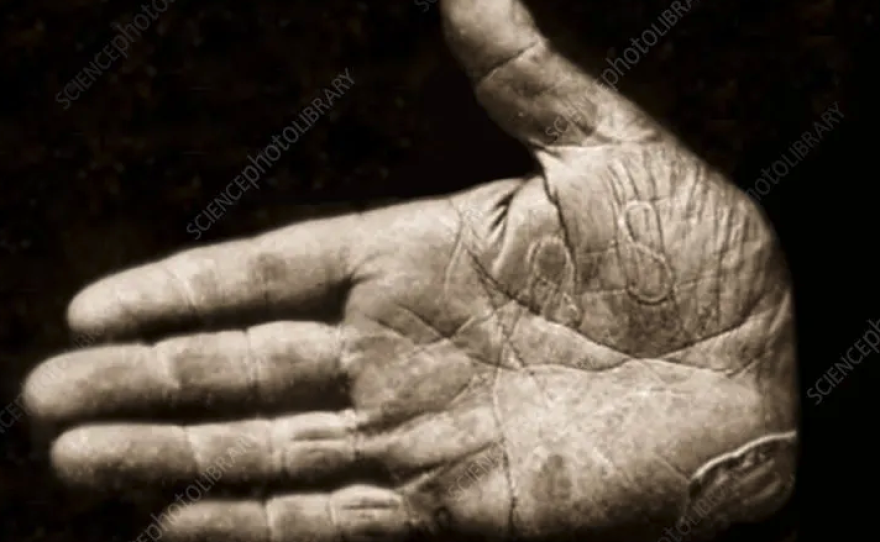
He became “the man with the branded hand,” an anti-slavery crusader whose handshake bore proof of his actions and beliefs. Branded by a United States marshal after being caught at sea trying to smuggle slaves, the scalded letters “S S” were meant to stand for “slave stealer.” Walker’s supporters turned them into “slave savior.”
Walker became an ardent abolitionist in his 30s, his pivotal moment arriving a decade later, in 1844. He employed his maritime skills to try to sail seven escaped slaves from Florida to freedom in the West Indies, but during the voyage became sick, incapacitated. No one else on the boat had seafaring skills. That caused his vessel to be “rescued” by a proslavery crew aboard a sloop. Slaves returned, he was carted to prison back in Florida.
Tied to a pillory, sentenced to a year in solitary confinement, chained to the floor, Walker also was fined $600 (a lot of money at the time) -- and publicly branded on his right hand.
Abolitionists eventually paid for his release. He became a hero north of the Mason Dixon line and out West, touring the country for months at a time expounding on the evils of slavery. People would gather to see and hear “The Man with the Branded Hand.”
His experiences, and physical proof offered in every handshake, inspired poet John Greenleaf Whittier to write verses that became part of the rallying cry of the abolitionist movement. "The Branded Hand" was published in 1846, while Walker was touring. Here are two of the three closing stanzas:
Then lift that manly right-hand, bold ploughman of the wave!
Its branded palm shall prophesy, "Salvation to the Slave!"
Hold up its fire-wrought language, that whoso reads may feel
His heart swell strong within him, his sinews change to steel.
…
And the masters of the slave-land shall tremble at that sign,
When it points its finger Southward along the Puritan line
Can the craft of State avail them? Can a Christless church withstand,
In the van of Freedom's onset, the coming of that hand?
While Walker had family on Cape Cod, he never returned here to live. He settled in Wisconsin, then Michigan, joining famous abolitionists like Sojourner Truth and Stephen Foster to organize anti-slavery efforts. When he died in Michigan in 1878, an obelisk was erected over his body, one side engraved with a single centered image; his branded hand. Thousands came to pay tribute.
There’s also a remembrance of him here at home, a plaque erected on the lawn next to the Harwich Historical Society.


