


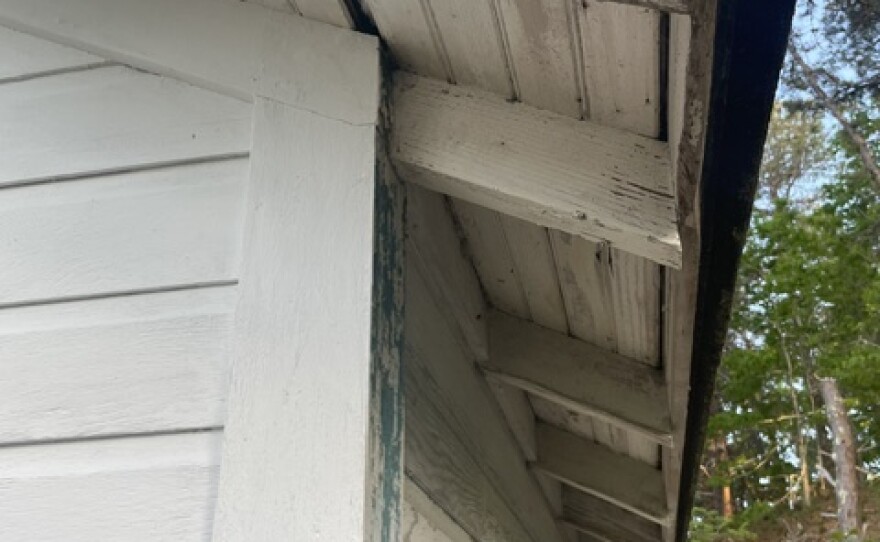

Some people do yoga. I paint a boathouse.
Physical similarities include stretching, balance, attention to detail, repetitive movements with a big picture in mind.
Spiritual similarities follow.
Top of Form
Bottom of Form
I default to “exercise” that is practical. I’d rather cut firewood, clear brush, and bicycle to the beach than calisthenics or ride a stationary bike. Boathouse painting is in the practical category for sure.
Housepainters taught me long ago that success is defined long before the first deft brush stroke. They call it “Prep.”
Scrape the hell out of every inch, launch loose flecks of old paint into the universe. Scour with sandpaper, scruff it up, marvel at how much more detritus departs.
Always start at the highest point and work down. Let gravity be a friend, flecks falling below your work, as will drips to come.
Never take ladders for granted, set them securely and do not attempt the top rung. Stretch with symmetry, ambidextrous, but do not be tempted to reach just a little farther than what the back of your neck deems comfortable. The ladder can move; if you fall, you will not.
During prep many classic yoga moves present: Cobra pose, tree pose, crane, heron, standing split, even the warrior pose. All will be repeated, hopefully avoiding one: The downward-facing dog.
What comes next?
Prime.
I don’t mean prime of life, though we can hope. I mean first coat.
“Self-priming” paints are wonderful, but I prefer a primer, especially “Kilz” that does a great job covering stains and knots. This could lead into a long discussion of the merits of latex (water-based) paints versus oil. For practical and ecological reasons I stick with latex.
Priming is the second visit; make sure this thin white sheet covers every moment and crease, hidden or not. Raw wood will sponge a lot of primer though the wood itself cannot be spongy — that would be a serious problem.
Now comes fun detail:
Caulk squeezed in a bead out of a tube with a caulking “gun” fills lines and seams. Spackle fills holes, say from pulled nails, pressed with a putty knife. Both smooth the surface and more importantly keep water from seeping behind the paint and blistering it away.
Then take a big step back, like an artist admiring a large canvas stretched and covered with gesso; clean, neutral, inviting artwork.
The final coat could be any color or colors. Flat exterior is best for walls; people like gloss for doors and trim because the sheen repels smudges while adding a subtle punctuating gleam.
All this creates a look that will survive many years (if done this way) and offer quiet satisfaction. Not a Zen garden, but soothing in its pragmatic way, also manifesting a mystery:
How can the thinnest coat of paint, not even a centimeter in depth, offer so much protection?
This describes exterior paint jobs. There’s another realm:
Interior jobs relate to the interior of the painter in different ways. That’s a topic for another day, though here’s one aphorism offered by a Zen housepainter:
“When painting the inside of a home, pay most attention to two places: The ceiling above the bed where the client sleeps, and the bathroom wall facing the toilet.”


